
In Vitro Fertilization (IVF) North Carolina
Are you considering IVF and want to learn more about the process? Schedule a free consultation with our expert team at North Carolina Center for Reproductive Medicine in Raleigh, where all your questions will be answered, and we’ll provide personalized guidance to determine if IVF is the best path for you. During your consultation, we’ll discuss your unique situation and outline steps to maximize your chances of success.
IVF Cost Estimate
NO LOGIN | SECURE | INSTANT
Is IVF the right path for you?
Take this quiz to determine if IVF might be a good next step on your fertility journey.
Customized IVF Care with Informed Guidance
Every fertility journey is unique, and at North Carolina Center for Reproductive Medicine, we believe treatment should be too. Our team develops personalized IVF treatment plans designed to address your specific medical needs, reproductive goals, and family planning preferences. We take time to understand your history and circumstances so that each plan is truly individualized.
Because IVF is not one-size-fits-all, your recommended treatment plan will determine the overall cost. During your in-office visit, we provide a clear financial overview of your customized plan, ensuring you know what to expect before moving forward.
Age is one of the most important factors influencing IVF outcomes. As fertility naturally declines, advanced maternal age can affect success rates and may increase the need for options such as ovarian rejuvenation or donor eggs. At NCCRM, we offer comprehensive guidance, advanced treatment options, and supportive counseling so you can make informed decisions about your family’s future with confidence.


What is In Vitro Fertilization (IVF)?
In Vitro Fertilization (IVF) is one of the most effective and widely used fertility treatments available today. IVF helps individuals and couples overcome infertility by creating embryos in a laboratory setting and then transferring them into the uterus to establish a pregnancy.
Who Can Benefit From IVF?
IVF may be recommended for:
-
Women with blocked or damaged fallopian tubes
-
Couples with male factor infertility (low sperm count, motility, or morphology issues)
-
Individuals with ovulation disorders or diminished ovarian reserve
-
Patients with endometriosis or unexplained infertility
-
Those who have not had success with other fertility treatments
-
Same-sex couples or single parents using donor eggs, sperm, or embryos
Advancements in IVF
Modern IVF offers many variations to fit each patient’s unique situation, including frozen embryo transfer (FET), egg freezing, donor eggs, donor embryos, low stimulation IVF, and preimplantation genetic testing (PGT) to screen embryos for chromosomal health. These advances have significantly improved success rates and made IVF accessible to a wider range of patients.
Advancements In IVF
Modern IVF offers many variations to fit each patient’s unique situation, including frozen embryo transfer (FET), egg freezing, donor eggs, donor embryos, low stimulation IVF, and preimplantation genetic testing (PGT) to screen embryos for chromosomal health. These advances have significantly improved success rates and made IVF accessible to a wider range of patients
IVF - Adopted Embryo
With frozen embryo adoption or donation, exra embryos created by another couple during IVF are cryopreserved and later transferred into the recipient’s uterus. The uterine lining is carefully prepared with hormones to support implantation. This option provides patients the opportunity to experience pregnancy and childbirth while offering embryos the chance for life.
IVF - Own Eggs
In this approach, a woman’s eggs are retrieved and frozen for future use. When she is ready, the eggs are thawed, fertilized in the lab, and resulting embryos are transferred into the uterus. This method allows women to preserve their fertility at a younger age, giving them the chance to attempt pregnancy later with the success rates associated with their age at the time of freezing.
IVF - Donor Egg
Donor egg IVF is an option for women who are unable to conceive with their own eggs due to age, premature ovarian failure, or other medical reasons. Eggs from a carefully screened donor are fertilized in the lab with sperm from the partner, and the resulting embryos are transferred into the recipient’s uterus. This treatment gives women the opportunity to carry and deliver a baby while significantly improving the chances of success.
IVF - Low Stimulation
Low stimulation IVF, sometimes called “mini IVF,” uses lower doses of fertility medication to encourage the development of fewer, but high-quality, eggs. This approach can be less physically demanding, more cost-effective, and may reduce risks such as ovarian hyperstimulation syndrome. It is often an excellent option for very young women or women with diminished ovarian reserve or those seeking a more natural alternative to conventional IVF.
Understanding The IVF Cycle Phases
Ovarian Stimulation
Phase One
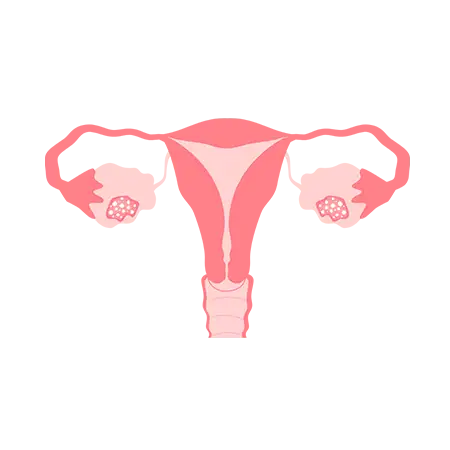
Fertility medications are prescribed to stimulate the ovaries to produce multiple eggs in a single cycle, increasing the chances of success.

Egg Retrieval
Phase Two
Mature eggs are collected from the ovaries through a minor outpatient procedure performed under sedation.
Fertilization
Phase Three
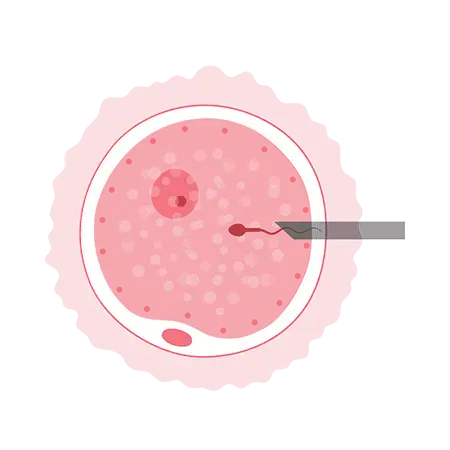
Retrieved eggs are combined with sperm in the laboratory. This can be done through conventional insemination or intracytoplasmic sperm injection (ICSI), where a single sperm is injected directly into the egg.

Embryo Development & PGT Screening
Phase Four
After fertilization, embryos are carefully nurtured in the lab as they grow and develop. Preimplantation Genetic Testing (PGT) can be performed during this stage to evaluate embryos for chromosomal abnormalities or specific genetic conditions. This helps identify the healthiest embryos for transfer, increasing the chance of a successful pregnancy while reducing the risk of miscarriage or inherited conditions.

Embryo Transfer
Phase Five
The prepared embryos are transferred into the uterus, typically a painless procedure. Post-transfer, patients undergo a brief recovery period before beginning a two-week wait for pregnancy testing. One or more embryos are carefully placed into the uterus through a simple, non-surgical procedure. Any additional high-quality embryos may be frozen for future use.

Pregnancy Test
Phase Six
About two weeks after transfer, a blood test is performed to determine if pregnancy has been achieved.
How NCCRM’s IVF Success Rates Compare Nationwide
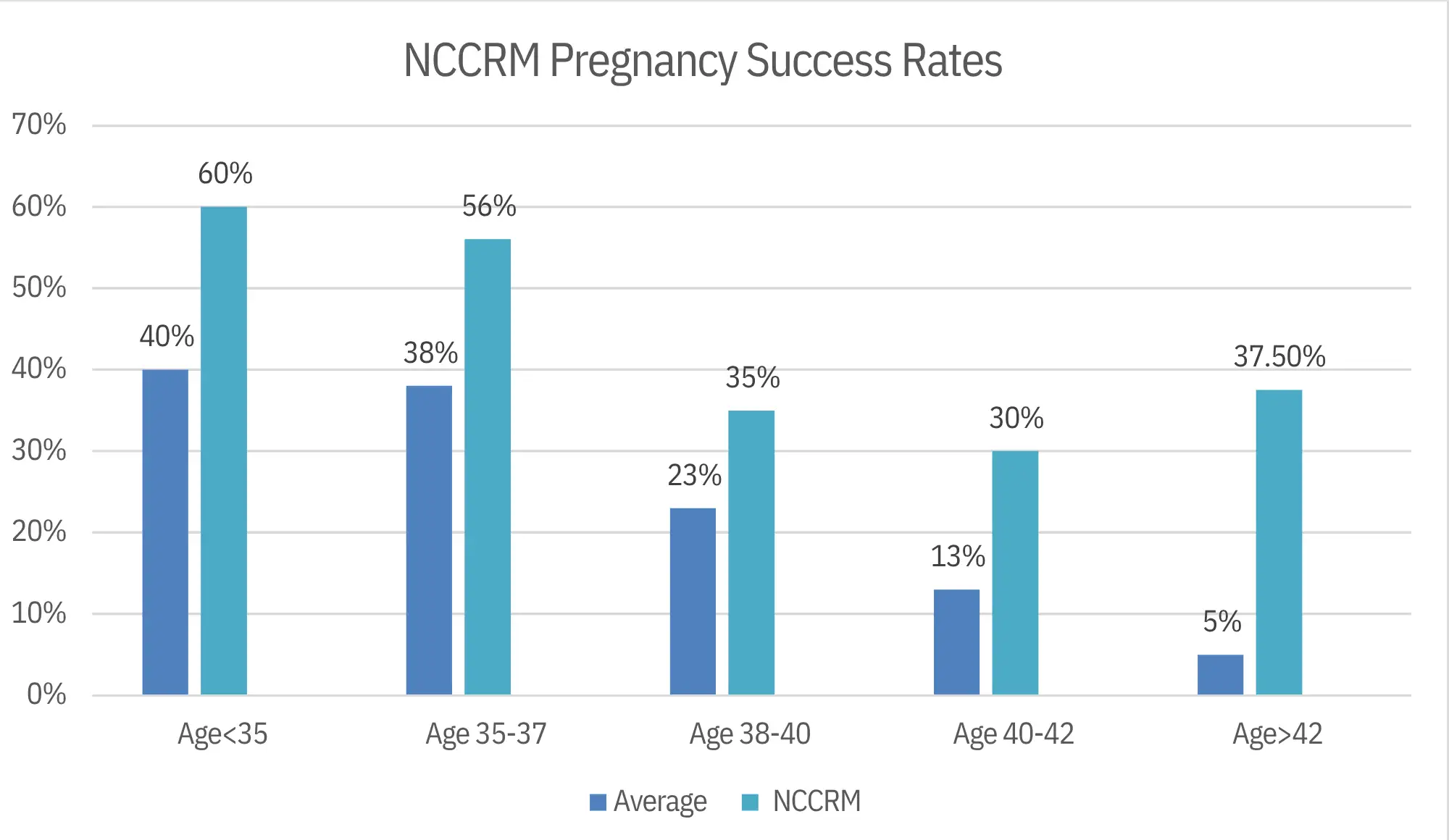
According to published CDC fertility data, NCCRM’s IVF success rates consistently exceed the national average across all age groups. We are particularly proud of our strong outcomes for women in their late 30s and 40s, who often experience more complex fertility challenges. The bar graph below highlights a clear comparison between NCCRM’s IVF success rates and national benchmarks, helping you confidently evaluate your fertility treatment options and next steps.
FAQs For In Vitro Fertilization (IVF)
What is IVF?
In vitro fertilization (IVF) is a fertility treatment where an egg is fertilized by sperm outside the body in a laboratory. The fertilized egg (embryo) is then transferred into the uterus to hopefully result in pregnancy. IVF is often used when other fertility treatments haven’t been successful or aren’t suitable.
What is IVF treatment?
IVF treatment involves several stages, including ovarian stimulation, egg retrieval, fertilization in a lab, embryo culture, and embryo transfer. The goal is to help individuals or couples who are struggling with infertility to conceive.
Is IVF harmful?
How long does IVF take?
How many embryos do you transfer?
When is IVF needed?
How standard is IVF?
IVF is one of the most common assisted reproductive technologies (ART). Each year, thousands of individuals and couples around the world undergo IVF treatments, with approximately 1-2% of all births in the U.S. being the result of IVF.
Is egg retrieval painful?
Egg retrieval is typically done under sedation or anesthesia, so most patients do not feel pain during the procedure. Some individuals may experience mild cramping or discomfort afterward, which usually resolves within one to two days.
Does in vitro fertilization work?
Am I a candidate for IVF?
Do I need donor eggs?
Is the embryo transfer painful?
Embryo transfer is generally a painless procedure that doesn’t require anesthesia.
Can I afford IVF?
NCCRM offers one of the most competitive, affordable, and transparent rates for IVF. Some insurance plans cover parts of IVF treatment, and NCCRM provides financing options. Learn more about IVF financing options.
How are frozen embryos transferred?
Frozen embryo transfer (FET) involves thawing a previously frozen embryo and transferring it to the uterus.
Is IVF painful?
IVF involves multiple procedures, some of which may cause mild discomfort, such as injections, and egg retrieval. However, medications and anesthesia are used to minimize discomfort during the process.
What if my eggs don’t fertilize?
This is very rare, especially with ICSI, as a single sperm is injected into each egg to assist with fertilization.
What is ICSI?
When do I need ICSI?
ICSI is typically recommended when there are male-factor infertility issues, such as low sperm count or poor sperm motility and morphology. It may also be suggested if previous IVF cycles had low fertilization rates or if there are specific issues with the eggs, like a hard outer layer, making it challenging for sperm to penetrate. It may also be necessary if there is a need for sperm to be retrieved surgically (e.g., in cases of blocked vas deferens).
Are there any additional considerations before starting IVF?
How successful is IVF?
Success rates for IVF vary based on age, overall health, and specific fertility issues. Generally, younger women tend to have higher success rates. Success also depends on embryo quality. Your doctor can provide a personalized success estimate.
How are embryos selected for transfer?
Can I work during IVF treatment?
What lifestyle changes should I consider before IVF?
Lifestyle changes, such as quitting smoking, reducing alcohol consumption, and maintaining a healthy diet and weight, can improve IVF and early pregnancy outcomes. Your doctor may provide specific recommendations tailored to your needs.
How do I start the IVF process?
The first step in the IVF process is typically a consultation with a fertility specialist. The our IVF specialist at North Carolina Center for Reproductive Medicine will evaluate your medical history, perform necessary tests, and develop a treatment plan suited to your fertility goals. NCCRM offers a free IVF phone consultation to help answer any questions. Schedule your consultation today.