What is Tubal Reversal Surgery or Anastomosis?
Tubal Anastomosis is a medical term for the process of tubal ligation reversal surgery. By Anastomosis we refer to the process by which our physician, Dr. Sameh Toma, repair and restore a woman’s fallopian tubes so that she will be able to again become pregnant.
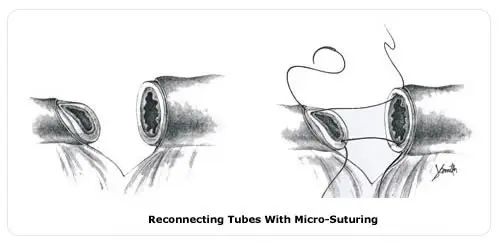
Anastomosis refers to the procedure by which our physicians repair and restore a woman’s fallopian tubes so that she will be able to again become pregnant. The North Carolina Center for Reproductive Medicine performs anastomosis surgery on an outpatient basis in our state-of-the-art facility in Cary, North Carolina, next to Raleigh. The microsurgery procedure and our proprietary techniques enable us to reduce recovery time, make the procedure affordable and – best of all – achieve a high pregnancy rate. The actual tubal ligation reversal surgery takes approximately 90 minutes.
The majority of patients will have patent tubes and become pregnant within one year of their anastomosis surgery. The pregnancy rate varies by type of tubal ligation, length and health of the remaining tubal segments, a woman’s age and other factors. Furthermore, tubal reversal enables most women to conceive naturally, without having to take fertility medications.
Learn more about tubal ligation reversal or Essure reversal process.